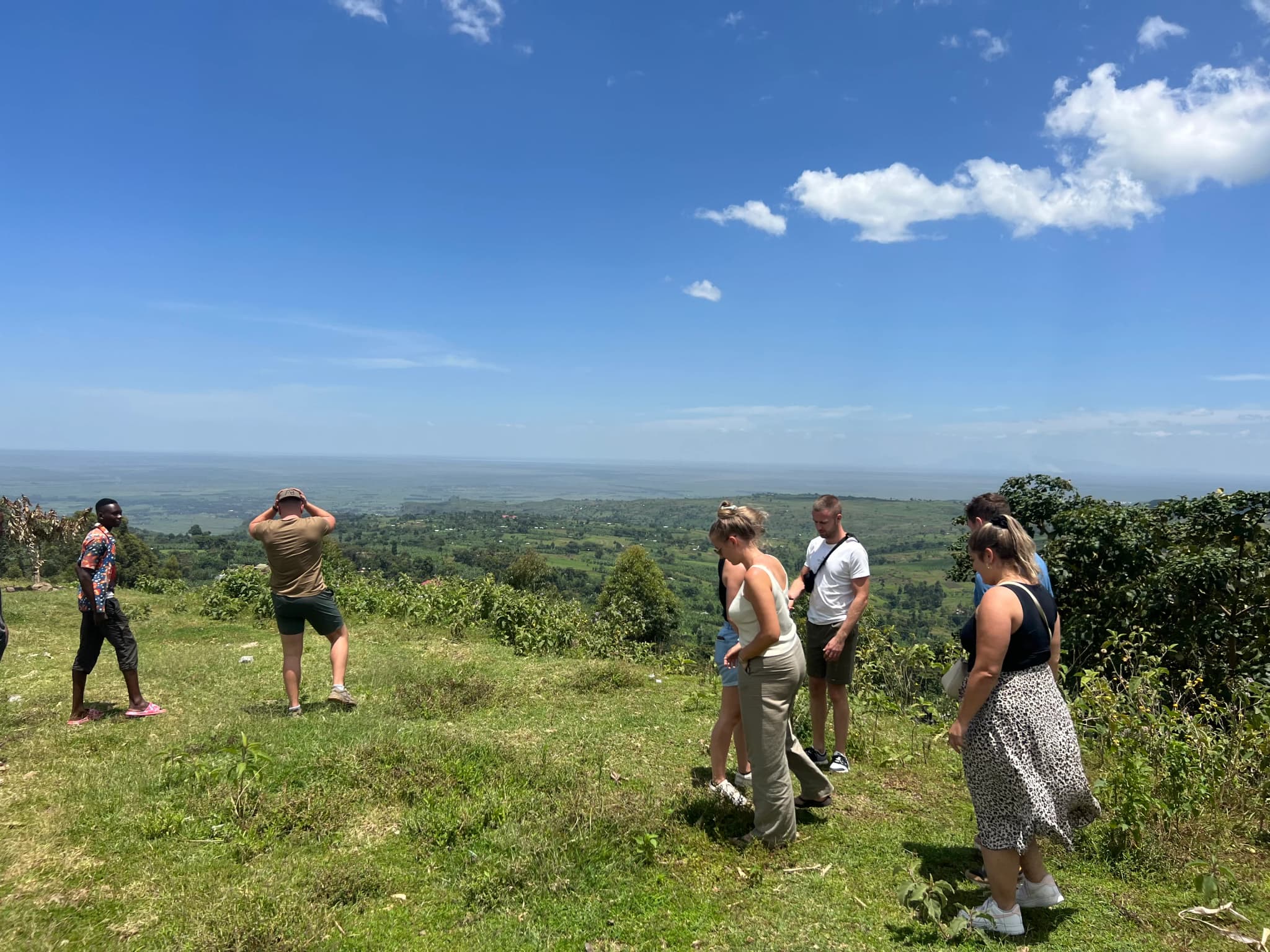
Mount Elgon National Park
About Mount Elgon National Park
Located on the Uganda-Kenya border, Mt Elgon boasts the largest volcanic base in the world, covering an area of 4,000 km². As the oldest and largest solitary volcanic mountain in East Africa, its vast form stretches 60km in diameter, rising over 3,000 meters above the surrounding plains. The cool heights of the mountain provide a respite from the hot plains below, offering a refuge for flora and fauna at higher altitudes. Within the Mount Elgon National Park, there are over 300 species of birds, as well as some antelopes, forest monkeys, elephants, and buffalos that call the mountainside home. The higher slopes are protected by national parks in Uganda and Kenya, creating an extensive transboundary conservation area that has been declared a UNESCO Man and Biosphere Reserve. Accommodation options include: Masai Backpackers (Kapkwai Village), The Crow's Nest (Sipi Falls), Twilight Sipi, and Camseil (Kapckwa).
Africa's Ancient Volcanic Frontier
Mount Elgon is an extinct shield volcano and one of Uganda's oldest geological formations, with its first eruption occurring approximately 24 million years ago. This makes it significantly older than other East African mountains like Kilimanjaro and Mount Kenya.
The mountain has been a critical water source for local communities for millennia. Archaeological evidence shows that caves on the mountain, particularly the famous elephant caves, have been used by humans and animals for thousands of years to mine salt and minerals.
Mount Elgon National Park was established as a protected area in 1993, creating a transboundary conservation area with Kenya's Mount Elgon National Park. This cross-border cooperation protects the mountain's unique ecosystem and allows wildlife to move freely across the international boundary.
The park's conservation is enhanced by its designation as a UNESCO Man and Biosphere Reserve, recognizing its exceptional biodiversity and the successful integration of conservation with sustainable community development on the lower slopes.
Geography & Climate
Geography
Mount Elgon boasts the largest volcanic base in the world, covering an area of approximately 4,000 square kilometers. The mountain's vast form stretches 60 kilometers in diameter, rising over 3,000 meters above the surrounding plains. The summit is not a peak but rather one of the world's largest intact volcanic calderas, spanning 40 square kilometers—large enough to hold the entire Mount Longonot National Park. Wagagai Peak, at 4,321 meters, is Uganda's second-highest mountain.
Climate
Mount Elgon experiences a montane climate with temperature variation based on altitude. The lower slopes are warm, while higher elevations become progressively cooler. The mountain receives high rainfall, particularly on the windward western slopes, supporting lush montane forests. The caldera creates its own microclimate with unique weather patterns. Clear mornings are common, with clouds typically forming by afternoon.
Wildlife & Nature
Mount Elgon's diverse elevation zones from 2,000 to 4,321 meters create varied habitats supporting over 300 bird species and numerous mammals. The mountain is famous for its elephants that enter deep caves to mine salt from the volcanic rock walls—a behavior documented nowhere else in Africa. The park's wildlife has adapted to the challenging mountain terrain and cooler temperatures.
Mammals
- Forest Elephants (famous cave-dwelling population)
- African Buffalo
- Black-and-white Colobus Monkeys
- Blue Monkeys
- Red-tailed Monkeys
- Olive Baboons
- Bushbucks
- Duikers
- Giant Forest Hogs
- Leopards (rarely seen)
- Serval Cats
- Rock Hyrax
- Spotted Hyenas
Birds
- Lammergeier (Bearded Vulture)
- Jackson's Francolin (endemic subspecies)
- Moorland Francolin
- Alpine Chat
- Hunter's Cisticola
- Tacazze Sunbird
- Black-collared Apalis
- White-starred Robin
- African Goshawk
- Mountain Buzzard
- Hartlaub's Turaco
- Bronze Sunbird
Flora
- Podocarpus forest (dominant at mid-elevation)
- Juniper trees
- Bamboo forests (extensive zones)
- Giant Groundsels (in moorland zones)
- Giant Lobelias
- Hagenia trees
- St. John's Wort trees
- Tree ferns
- Helichrysum (Everlasting flowers)
- Tussock grasses (upper slopes)
- Moss and lichens
- Dendrosenecio elgonensis (endemic giant groundsel species)
Local Culture & Communities
The Bagisu people on the Uganda side and the Kalenjin (Sabaot) on the Kenyan side have profound cultural connections to Mount Elgon. The Bagisu are famous for their Imbalu circumcision ceremony, one of East Africa's most significant cultural rites. The mountain is central to their cultural identity and traditional practices.
Cultural Experiences
- Learn about the Imbalu circumcision ceremony - a UNESCO-recognized cultural practice of the Bagisu people
- Experience traditional Bagisu dance and drumming performances
- Visit Sipi Falls area and tour coffee plantations, learning the bean-to-cup process
- Participate in rock climbing and abseiling at Sipi Falls with local guides
- Engage with the Sabiny people and learn about their honey harvesting traditions
- Visit local craft markets featuring traditional basket weaving and woodcarving
- Tour community schools and development projects supported by park tourism
Best Time to Visit
Mount Elgon can be climbed year-round, though the dry seasons offer the most comfortable trekking conditions. The mountain's position on the Uganda-Kenya border means it receives weather from both regions, creating somewhat unpredictable conditions.
Dry Season (June-August & December-February)
The dry season provides ideal conditions for hiking and trekking with less muddy trails and clearer skies for panoramic views. The famous Sipi Falls is still impressive but more accessible for viewing and photography. Wildlife is more easily spotted as animals concentrate around remaining water sources. Summit attempts to Wagagai Peak have higher success rates with more stable weather. The spectacular caldera is more frequently visible without cloud cover. Local guides report these months as best for exploring the unique elephant caves.
Wet Season (March-May & September-November)
The wet season transforms Mount Elgon into a verdant paradise with lush vegetation and spectacular waterfalls at maximum flow. Sipi Falls and other cascades are at their most dramatic and photogenic. Birding is exceptional with both resident and migratory species active. Trails become challenging with muddy, slippery conditions requiring good fitness and waterproof gear. The caldera often fills with mist, creating an ethereal atmosphere. Fewer trekkers mean more solitude and intimate encounters with nature. Local communities are busy with agricultural activities, offering authentic cultural experiences.