Lake Mburo National Park
About Lake Mburo National Park
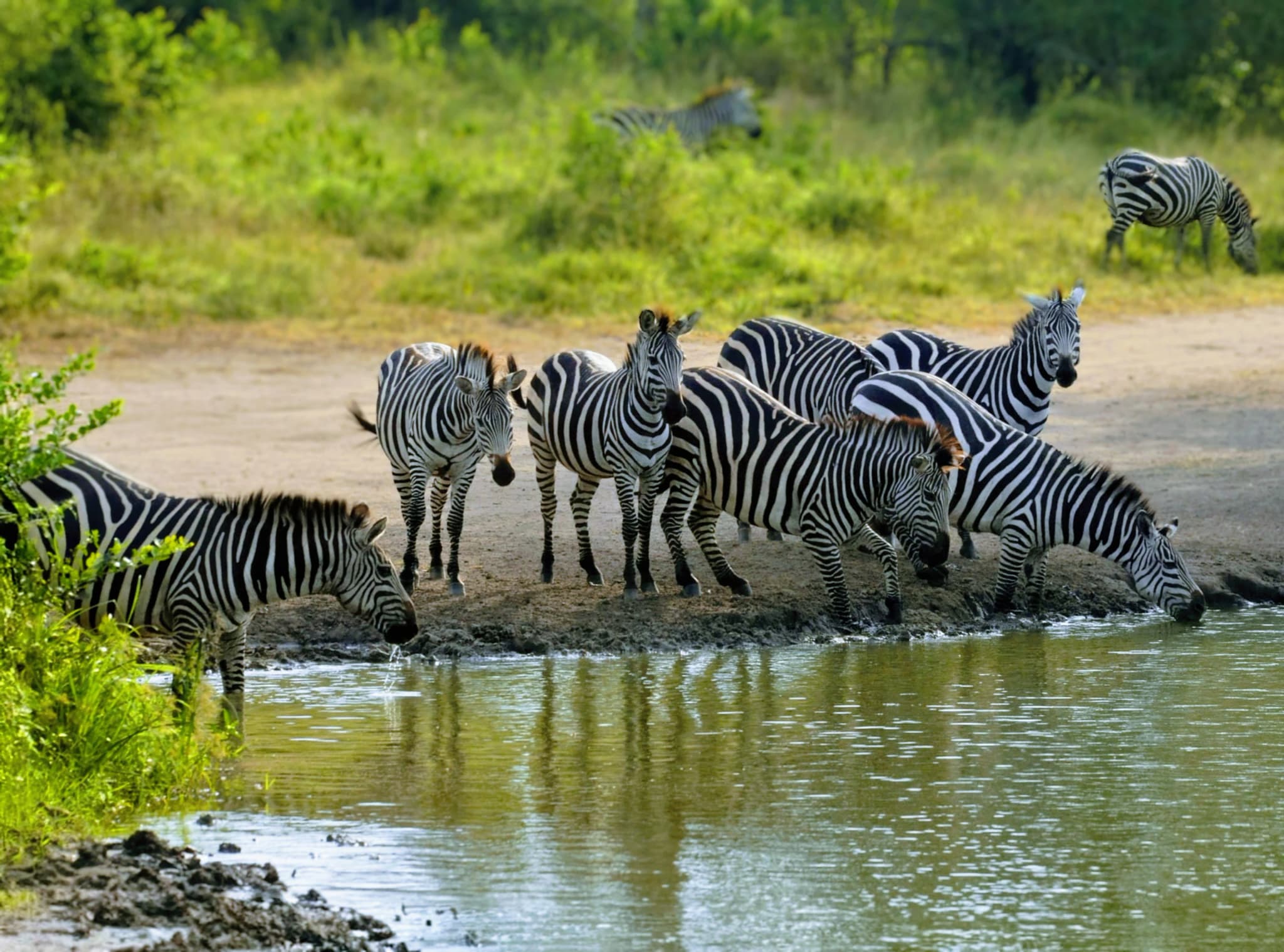
A small but charming Savannah national park located in Western Uganda, approximately 30 kilometers east of Mbarara and 240 kilometers west of Kampala. Despite its small size, LMNP is home to a wide variety of wildlife, including 350 bird species and species such as zebra, impala, eland, buffalo, oribi, defassa waterbuck, leopard, hippo, hyena, and reedbuck. Once part of the continuous plains of Northern Tanzania, Lake Mburo National Park hosts a diversity of species that cannot be found anywhere else in Uganda. The park is fed by the Ruizi River, which supports 14 lakes and wetlands that provide abundant grazing for herds of antelope. The enchanting Acacia woodland is an increasingly important part of the park's landscape. The park is also home to the magnificent Ankole cattle, traditionally carried by the Bahima pastoralists, which graze peacefully alongside the wildlife, creating a unique blend of pastoral and wildlife landscapes. Accommodation options include: Mihingo Safari Lodge, Rwakobo Rock, Mburo Safari Lodge, Kimbala, Arcadia Cottages, Leopard Rest Camp, and Mburo Eagles Nest.
A Park Shaped by Pastoralism and Conservation
Lake Mburo was originally gazetted in 1933 as a controlled hunting area, reflecting early colonial conservation approaches. In 1963, it was upgraded to a game reserve to provide greater protection to the area's unique savanna wildlife.
In 1983, the reserve was elevated to national park status. However, this created conflict with the Banyankole Bahima pastoralists who had traditionally grazed their Ankole cattle in the area for generations. These communities were expelled from their ancestral lands, causing deep resentment.
In 1985, following political changes in Uganda, the previous residents re-occupied the park, expelling staff, destroying infrastructure, and killing wildlife. Less than half of the park's original area was eventually re-gazetted by the government in 1986.
Today, Lake Mburo represents a unique model of conservation where Ankole cattle graze peacefully alongside wild zebras and antelopes, demonstrating that traditional pastoralism and wildlife can coexist when managed appropriately.
Geography & Climate
Geography
Lake Mburo National Park, located in Kiruhura District in western Uganda, is the smallest of Uganda's savanna parks but remarkably diverse. Situated approximately 30 kilometers east of Mbarara and 240 kilometers west of Kampala, the park's 260 square kilometers encompass acacia woodlands, rocky ridges, seasonal and permanent swamps, and five picturesque lakes. Wetlands cover 20% of the park, forming part of a 50-kilometer wetland system.
Climate
The park lies in a rain shadow between Lake Victoria and the Rwenzori Mountains, resulting in lower rainfall than surrounding areas. This creates ideal savanna conditions. The climate is tropical with bimodal rainfall patterns. Temperatures range between 23-25°C (73-77°F), making it pleasant year-round for game viewing and outdoor activities.
Wildlife & Nature
Despite its small size, Lake Mburo hosts impressive biodiversity that cannot be found together anywhere else in Uganda. The park is Uganda's only location for impalas and the best place to see zebras, with over 5,000 individuals. The wetlands support healthy populations of hippos and crocodiles, while the savanna sustains diverse antelope species and predators.
Mammals
- Burchell's Zebras (over 5,000 - largest population in Uganda)
- Impalas (only population in Uganda)
- African Buffalo
- Hippopotamus
- Eland (Africa's largest antelope)
- Topi
- Defassa Waterbuck
- Klipspringers
- Oribi
- Bushbucks
- Leopards
- Spotted Hyenas
- Side-striped Jackals
- Rothschild Giraffes (recently reintroduced)
Birds
- African Finfoot (rare wetland species)
- Shoebill Stork (occasional sightings)
- Papyrus Yellow Warbler
- African Fish Eagle
- Saddle-billed Stork
- Brown-chested Lapwing
- African Wattled Lapwing
- Red-faced Barbet
- Green Wood-hoopoe
- Rufous-bellied Heron
- Bare-faced Go-away-bird
- Nubian Woodpecker
Flora
- Acacia woodlands (dominant vegetation)
- Papyrus swamps
- Thicket vegetation on rocky hillsides
- Savanna grasslands
- Euphorbia candelabra trees
- Wild Sisal plants
- Combretum woodland
- Ficus trees near water sources
- Whistling Thorn Acacias
- Lake shore aquatic vegetation
Local Culture & Communities
The Banyankole people, particularly the Bahima pastoralist clan, have deep cultural connections to this landscape. They are famous for raising Ankole cattle, a magnificent long-horned breed that has been central to their identity for centuries. The relationship between the park and local communities has evolved from conflict to cooperation.
Cultural Experiences
- Visit Bahima communities and learn about traditional Ankole cattle rearing practices
- Experience Ankole long-horned cattle - some of Africa's most beautiful cattle with horns spanning up to 2.4 meters
- Participate in traditional milk processing and taste local dairy products
- Learn about the cultural significance of cattle in Ankole society and bride price traditions
- Engage with community conservation initiatives around the park
- Visit local craft markets featuring traditional basket weaving and pottery
Best Time to Visit
Lake Mburo National Park can be visited comfortably year-round due to its moderate climate and relatively low rainfall. The park's small size makes it an excellent destination for short safaris from Kampala or as an add-on to western circuit itineraries.
Dry Season (June-August & December-February)
The dry season offers excellent game viewing as wildlife concentrates around the lakes and permanent water sources. The park's extensive network of tracks becomes easily accessible, perfect for game drives and guided nature walks. Boat safaris on Lake Mburo provide exceptional opportunities to see hippos, crocodiles, and water birds. The dry plains make it easier to spot predators and the large zebra herds are particularly visible.
Wet Season (March-May & September-November)
During the wet season, the park transforms with lush green vegetation and abundant wildflowers. Migratory bird species arrive, boosting the park's bird count significantly - a paradise for ornithologists. Wildlife disperses across the expanded grazing areas, making sightings more distributed but rewarding. The landscape becomes particularly photogenic with dramatic skies and vibrant scenery. Some tracks may become challenging after heavy rains, but the main circuits remain accessible.